A buyer relocating to La Porte from almost anywhere else in the country assumes a home inspection is optional, a formality between agents, or something the lender requires only for older houses. Then an offer gets accepted on a cottage near Pine Lake, and somewhere in the paperwork is a requirement neither the buyer nor their out-of-town agent has seen before: a septic inspection and a well water test, mandated by the county, due before the closing table, not after.
This isn't a lender overlay or a home warranty upsell. It's a standing local law, and it applies whether the sale is a $150,000 fixer or a $600,000 place on the water. Understanding how it works, and where it hits hardest, matters more than the median price anyone quotes you.
The rule that doesn't show up in a national search
La Porte County was among the first counties in Indiana to pass a point-of-sale property transfer ordinance requiring septic system inspections at every residential sale. La Porte County was the first in Indiana to enact an official point-of-sale property transfer ordinance requiring that all septic systems be inspected by certified members of the Indiana Onsite Wastewater Professionals Association. That original rule, Ordinance 2016-02, still forms the backbone of the requirement today, and the county has kept updating it. The La Porte County Health Department administers a well-and-septic addendum dated as recently as 2025, meaning this is not a dusty law nobody enforces anymore. It's an active, evolving part of how property changes hands here.
The ordinance wasn't written in a vacuum. It was drafted with the assistance of a committee made up of representatives from the La Porte County Realtors Association, the La Porte County Health Department, a banker, and a title company. That matters for how you should read the rule. It wasn't imposed on the local real estate industry from the outside. It was built by the people who close these deals, specifically to stop septic and well problems from surfacing after a buyer has already moved in.
Indiana itself has no statewide law requiring septic inspection at the point of sale. This is a La Porte County decision, layered on top of state code, which is exactly why buyers moving in from counties without a similar ordinance are the ones most likely to be caught off guard by it.
What actually gets triggered at closing
If a property has an on-site septic system or a private well, here's the sequence the ordinance sets in motion:
- The seller or buyer hires a septic inspector who is IOWPA-certified and registered with the county health department, not just any local contractor.
- That inspector pulls the property's original septic drawing from the health department and compares it to what's actually in the ground, sketching any differences.
- A certified lab tests the well for the standard water quality panel, with results checked against EPA drinking water standards.
- Both reports go to the buyer and to the health department before or at closing.
- The health department issues a certificate of compliance, or non-compliance, based on what came back.
A compliance certificate is valid for one year from issuance, which is worth knowing if you're a seller getting your home ready months before it actually lists. Test early enough and the clock can run out before you find a buyer.
Same lake, different rules, depending on what's under the yard
Not every La Porte County address is subject to this in the same way. Properties connected to municipal water and sewer skip the septic inspection and well test entirely. Instead, the seller just supplies a copy of the water or sewer bill, or a letter from the municipality, and there's no fee for that portion of the property transfer.
That distinction plays out differently even within a single small town. In Pottawattomie Park, a town inside La Porte County near the Lake Michigan shoreline, roughly a third of households are tied into the Michigan City Sanitary District's sewer system, while the remaining households run on private septic that varies in age and condition. Two houses on the same street can face completely different closing requirements depending on which side of that line they fall on.
This is the detail worth confirming in the first phone call, not the week before closing. If you're touring homes near any of La Porte County's lakes, ask directly whether the property is on municipal service or a private well and septic system. It changes your timeline, your costs, and in some cases your negotiating leverage.
What failure actually costs against a lake-cottage price tag
The county's own waiver paperwork spells out what a failed inspection can mean in dollars: a new septic system may cost $5,000 to $15,000 or more, a water well supply $4,000 or more, and a drinking water treatment system $500. Those numbers land very differently depending on what the home is worth.
| Repair | Typical Cost | Share of a $230K median listing (August 2026) |
|---|---|---|
| Septic system replacement | $5,000–$15,000+ | roughly 2.2%–6.5% |
| New well | $4,000+ | roughly 1.7%+ |
| Water treatment system | $500 | roughly 0.2% |
Homes in La Porte, including several of the lake listings on Pine Lake, carried a median price of $230,000 as of early August 2026, typically selling in about 41 days and drawing roughly two offers. On a home in that price range, a failed septic inspection isn't a rounding error. It can represent a meaningful percentage of the entire purchase price, which is a very different negotiation than the same repair on a $500,000 inland property where it barely moves the needle.
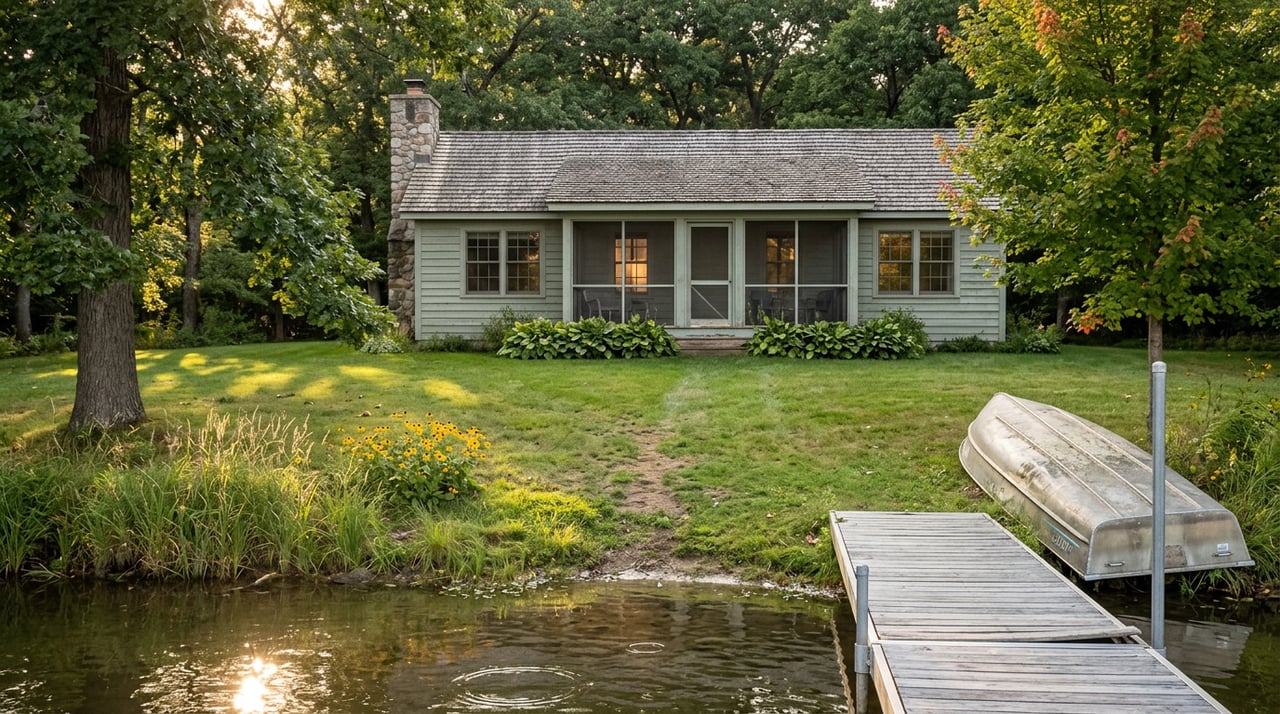
Many of the older lake cottages around Pine Lake and Stone Lake predate current septic sizing standards. County code sets a minimum tank size of 750 gallons for anything installed today, but a cottage built decades ago for seasonal weekend use may have been designed around a much smaller household and a smaller tank, never upgraded as the home was converted to year-round living. That's exactly the kind of system an inspector is most likely to flag, and exactly the kind of home where the repair cost eats the biggest bite out of the sale price.
The waiver isn't an exit. It's a delay.
Some sales move through without the inspection completed up front. The county allows a waiver for bank-owned properties, HUD sales, quit claim transfers, and tax or sheriff sales, letting the buyer close first. But that waiver comes with a catch: the buyer agrees to submit both the septic inspection and the water test to the health department within 45 days after closing, and to release the health department from any liability if either system fails.
In other words, the waiver doesn't remove the requirement. It just moves the discovery of a costly problem from before closing to after you already own the house. For anyone buying a distressed or bank-owned property near the water, that's worth factoring into your offer, not treating as a shortcut.
A short FAQ
Does Indiana require septic inspections at every home sale? No. There's no statewide law requiring it. La Porte County chose to adopt its own point-of-sale ordinance, which is why buyers coming from other counties or other states are often surprised to see it.
What if the home I'm buying is on municipal water and sewer? Then the septic and well portion of the ordinance doesn't apply. You'll supply a water or sewer bill or a municipal letter instead, and there's no fee for that part of the transfer process.
Who can perform the inspection? It has to be an inspector certified through the Indiana Onsite Wastewater Professionals Association and registered with the La Porte County Health Department, not a general home inspector or handyman.
How long does a compliance certificate last? One year from the date it's issued. If your home doesn't sell within that window, you'll need to test again before closing.
Buying or selling a lake home, rural property, or acreage in La Porte County comes with details like this one that don't show up on a listing sheet. If you want a straight answer about what a specific address will require before it can close, or what your own property might need before you list it, Traci Gaddis can walk you through it street by street. Get a Free Home Valuation and start the conversation with the facts already on the table.